
Horn Review
Schmid French Horn Review
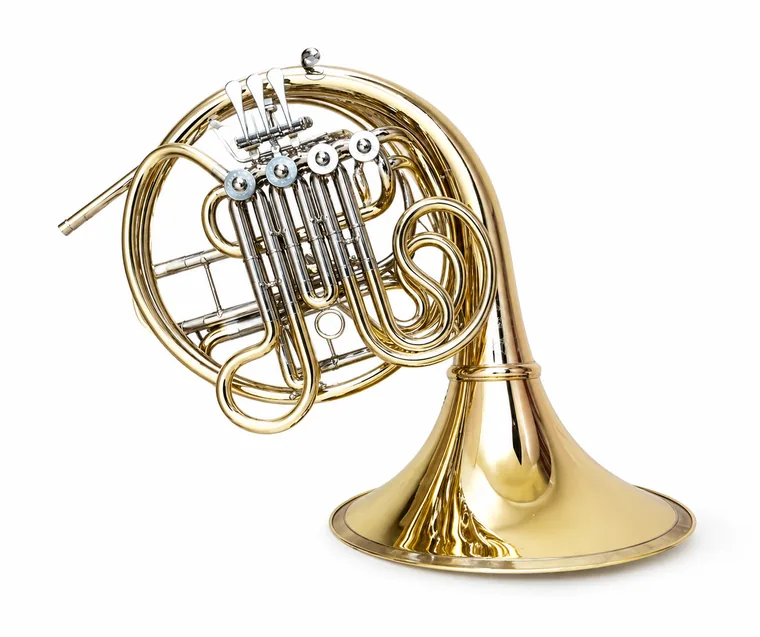
HornReviews take
Schmid French Horn Review
Pros
-Light
-Easy to play
-Popular with pros
Cons
-Expensive
-Spots can appear on bell
Summary
Engelbert Schmid horns have sky-rocketed in popularity over the last decade, with converts ranging from Phil Myers of the NY Philharmonic to Pip Eastop of the London Chamber Orchestra. What's all the fuss about? This German horn maker is quickly gaining a reputation for innovative manufacturing practices that are resulting in more efficient, lighter weight horns. This is especially beneficial for Schmid's popular triple horns. "Mathematics and physics were my favorite subjects in high school," says Mr. Schmid, who uses digital models to construct horns to exacting standards of measurement.
Schmid double horns are designed using Geyer/Knopf foundation, typically resulting in great smoothness of slurs at the expensive of some intonation issues on certain notes. Schmid has taken extensive efforts to solve the intonation inconsistencies, one reason why pros are gravitating toward these horns.
Another typical characteristic of Geyer/Knopf style horns is a brighter sound. Popular in many American orchestras, the brighter tone is less appreciated in Germany, where Schmid horns are made. Schmid horns have a sufficiently dark tone to win over 8D holdouts and tempt some loyal Alexander players, but have their own sound that is unique. "I wanted to tone down the often aggressive core of German horn playing and to produce a more noble sound," says Schmid. Schmid offers a number of customization options with bell and metal combinations, allowing players to make the ideal sound for them.
Some used Schmid horns show lacquer or finish spotting around the bell. If you prick them with a pin when you first notice them, it can help to reduce the spreading. While these spots don't affect tone quality, it is not expected for a horn in this price range. But spots or not, the Schmid horns are in high demand by top players and as a result hold their value very well.
Also consider: Especially within Germany, the Schmid's main competition is the popular Alexander 103 which has a stronghold on the market.
Player rating
Played this horn? Add your take.
Your experience helps another player decide what is worth trying.
Specs at a Glance
- Type
- Full double horn
- Key
- F/Bb
- Design family
- Geyer/Knopf
- Bell
- Detachable
- Bell diameter
- varies by variant
- Materials
- Yellow brass, gold brass, nickel silver, or sterling silver
- Linkage
- Custom order
- Finish options
- Custom or special order
- Made / assembled in
- Germany
- Production type
- Custom-built
- Availability
- Made to order; used examples are occasional
Configuration notes
- Exact specifications may vary by individual instrument or custom order.
Published new prices
- USD 14,295Engelbert Schmid "Golden Cut" - Yellow Brass - Detachable Bell - Unlacquered FinishAs of
Prices vary by configuration and may exclude case, tax and shipping.
Player Reviews
3 owner/player reviews
- 2.9
Player review
Lots of spots on the bell. Paid so much, it plays pretty good but those spots. It is unsightly for the price.
Helpful to another player? - 5.0
One of the best horns ever!
I recently purchased a Schmid full double (used) and I'm very satisfied! The instrument is well centered and plays well in all the registers. It is the lightest horn I've ever played, and it feels GREAT! It can be tuned to play in E/A as well as F#Bnatural, which makes some concerts and excerpts (Weber concertino and Gazza ladra come to mind!) much more accessible. The quality of the rotor machine is exceptional, feels very light and has a wonderful response. The sound can be bright, but if you use the right mouthpiece it can arrive at a much more darker sound, like a paxman. Also the kind of bell and the material can make the difference!
Helpful to another player? - 4.6
Schmid horn
An excellent horn, very playable and very close to a natural horn feelling. Just TOO expensive.
Helpful to another player?