
Horn Review
Conn 6D Review
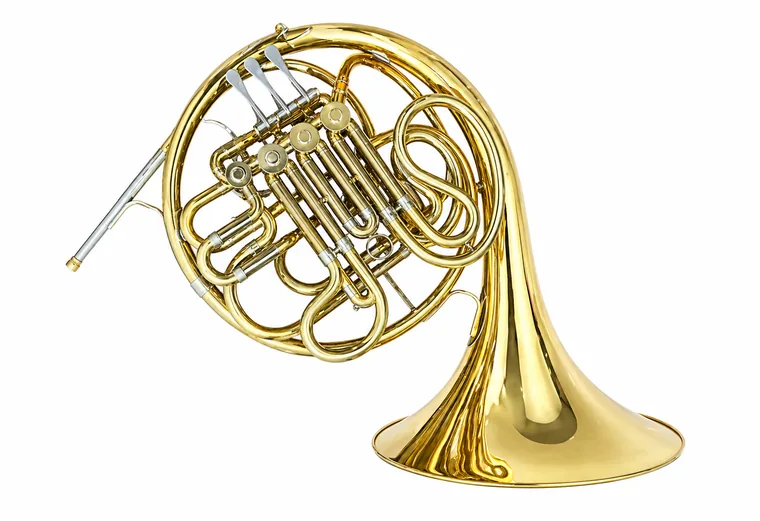
HornReviews take
Conn 6D Review
Pros
- Good value for the money
- Eastlake models are well made
- Easier to play than Conn 8D
Cons
- Not considered a "professional horn" like the 8D
Summary
The Conn 6D is designed similarly to its more popular Kruspe-style cousin the Conn 8D, but the horn is a bit smaller and about 25% less expensive -- making it a popular choice for younger students who find the 8D too unwieldy and out of budget. Because of the smaller size, the horn can feel easier to play and respond. This is particularly helpful when playing quick passages where the notes need to come out right away, or in smaller ensemble settings where an 8D's sound might come across as too big and "woofy". While the 6D does have more of a student reputation, it should not be overlooked by even more advanced players seeking a more controlled tone and ease of playing. In fact, back in the mid 20th century the 6D was considered a more professional level horn. The original Star Trek movie solos were recorded on Conn 6Ds.
As with all Conn horns, you need to be careful about buying used. Manufacturing problems plagued Conn in the 1970s and early 80s when their plant moved to Texas. Any horns made prior to that time in Elkhart are extremely valuable. And those made after 1986, in Eastlake, are generally of better quality. There are many great used 6Ds on the market for a careful buyer at good value.
Bottom line: Because the 6D has not enjoyed the same professional lime light as the 8D, it is perceived as less valuable in the marketplace. Discerning players should use this perceived weakness to their advantage and pick up a well made horn whose ease of playing and strong sound belie its 25% price discount compared to the 8D. The 6D is featured on our list of best cheap horns.
Cost: The 6D has historically been priced below the Conn 8D; check current dealer and used-market pricing before budgeting.
Also consider: The Holton H379 is a comparably priced intermediate horn with a good reputation for consistency and playability.
Player rating
Played this horn? Add your take.
Your experience helps another player decide what is worth trying.
Specs at a Glance
- Type
- Full double horn
- Key
- F/Bb
- Design family
- Kruspe
- Bell
- Fixed or detachable
- Bore
- 11.89 mm / .468 in
- Bell diameter
- 305 mm / 12 in
- Materials
- Body: mixed materials; bell: yellow brass
- Finish options
- Lacquered or silver plated by special order or variant
- Made / assembled in
- United States
- Production type
- Factory-made
- Availability
- Current production; special order
Configuration notes
- Some examples may differ by bell type, linkage, material, or variant.
Published new prices
- USD 5,7196D Artist SeriesAs of
Prices vary by configuration and may exclude case, tax and shipping.
Player Reviews
9 owner/player reviews
- 4.6
New to 6D
I played an 8D for about 10 years. A car wreck and damage to my jaw made me stop playing…so I sold my awesome 8D so someone else could enjoy playing it. Recently had dental surgery and am now able to play horn again. It’ll take some time to get back in shape…but I’m still good to go on low horn parts. I just got a 1952 made 6D today…and am working on getting back in shape. I think the smaller 6D was the right move for me to get back into Horn playing. I may eventually look for an 8D…but this silver 6D is the right size for me for now.
Helpful to another player? - 4.5
Play mine in a pro quintet
I am an adult semi-pro and I play on a 6D in my woodwind quintet. It has a beautiful tone and quick response. The smaller horn really blends well with the other players. The big playability issue I have is how sharp it is. Fortunately, my quintet is ok with tuning to 445 (20¢ sharp) since me tuning to 440 basically means my main Bb slide is about to fall out. Construction is solid, though I have had to resolder some of the original braces, and my horn is never in temperature extremes nor does it get jostled around. It was a heck of a bargain, and I would recommend it to many (not all) musicians looking for a horn.
Helpful to another player? - 4.0
Great For School
Our school makes our beginner band play with Conn 6D horns. It's great to prepare us for the Conn 8Ds we get in other bands. It's great if you want a student horn. It does dent a bit easily though.
Helpful to another player? - 4.6
Pro Horn Player
I love this horn! I own a 1937 Conn 6d and a 1968 Conn8d. I use my 8d for Studio recording and Chamber and my 8d for Broadway pits and orchestra.
Helpful to another player? - 4.0
Horn Players Inc.
I feel the horn plays beautifully. Only downside it the distance of the pinkie ring from the thumb key ( requires the hand to stretch.)
Helpful to another player? - 2.3
Awful configuration
This is the weirdest horn. It plays alright, but it gets condensation much faster than I'm used to. I wouldn't ever buy this horn on my own.
Helpful to another player? - 3.3
Great Intermediate Horn
First things first the main flaw I find with the horn is that it's very hard to compete in a large concert band setting with when everyone else is conn 8d's and Yamaha 668s. So if you're going to honor band it's going to be a struggle to even be heard without sounding bright or blatty. Yeah, the blattyness aspect of the horn is pretty present and low notes don't speak quite as clearly as some would hope. But then again I am comparing this horn to horns twice its price. Despite all this, it does great at being a beginning and intermediate instrument. And on top of that, it blends so nicely within a smaller band and orchestras (not mahler-esque movements). It's a pretty sturdy instrument and one more thing to notice is that in solo works sound nice and focused on this horn. The B Flat side does play much more comfortably on the F side but for the skill group this horn is aimed at I don't think it matters too much. In short, It's a great horn for those early years when you trying to understand what is this contraption called music. It is a little bit pricey as you can find some pretty good horns of even less price. For example, Kessler and Son's offer a soloist series french horn for 1.2 K and it imo has a more solid build and tone quality.
Helpful to another player? - 4.3
Ultimately up to the player
First and foremost, this horn WILL NOT HOLD the player back given that the horn is in good condition. The medium throat does change how the horn plays compared to an 8d, however, any differences between the two horns can be overcome simply based on the player. The right amount of talent can make the 6d sing just as well as an 8d. This horn is quite a solid choice for a horn if you're perhaps a college/high school student. In short, Conn's mass produced "intermediate model" is perhaps just as strong as an 8d and sometimes even better in certain situations. Awesome construction, and will last decades when given proper care. Would recommend this horn!
Helpful to another player? - 4.0
Big Sound
I began playing the horn at the tender age of 12 and it was a fantastic fit. I played all through High School and went to college on a music scholarship (which are hard to come by). That was 15 years ago and I have recently picked up my horn again and started playing in the local community orchestra. I am not an accomplished hornist to say the least, but I do know my way around the instrument and feel confident in giving the 6D a review. The Conn 6D has a BIG sound! This has a lot to do with the large wrap that is so common in American made horns. There is a relatively low amount of resistance when you blow through the horn which can be a good thing, and a bad thing. It offers very crisp responsiveness and as long as you know where you're going, it is a very friendly instrument to play. Don't let this fool you, because if you don't have an ear for where the next note is, you're not going to hit it. The 6D is very unforgiving in this respect. The tone of the instrument has everything to do with the individual horn, how much damage it has endured over the years, and quite simply how much stress there is on the braces. I recently picked up a used Elkhart M series that has been through its paces, and when I picked it up to play, I sounded like a middle schooler. I plan to have this horn reconditioned and cut the bell for a screw bell conversion. By taking out the stress on the braces, and offering a little extra mass to the bell I hope to improve the overall tone and resonance of the horn. All in all, this is a solid horn to play and I am excited to add it to the ever growing family of instruments that I have.
Helpful to another player?